November 12, 2026
In heavy industrial operations, moving massive equipment requires precision, coordination, and careful execution. When a project hits a snag during the handling of heavy loads, the ripple effect can pause entire production lines, throw schedules off track, and drive expenses through the roof. Industrial rigging forms the backbone of these complex transfers, serving as the bridge between static machinery and safe repositioning. Mistakes made during initial setup or execution often stem from small details that were overlooked early in the process. By focusing on smart, methodical practices, operations managers can protect their project timelines, keep crews safe, and maintain steady progress from start to finish.
1. Selecting Appropriate Equipment Hardware
Every heavy lifting scenario requires specific gear rated for exact weight requirements and environmental conditions. Using mismatched shackles, slings, or hoists creates unnecessary stress points that jeopardize the entire structure during a lift. Selecting industrial rigging components with verified capacity ratings ensures that loads remain stable throughout the move. Wire ropes, synthetic web slings, and alloy steel chains each offer distinct advantages depending on temperature, chemical exposure, and load sharp edges. Taking the time to pair the correct hardware with the precise load parameters prevents equipment failure and avoids unexpected operational downtime.
2. Conducting Thorough Pre-Lift Equipment Checks
Hardware wears down over time due to constant tension, friction, and environmental exposure. Inspecting industrial rigging gear prior to every use prevents compromised components from causing structural failures mid-operation. Riggers check for warning signs like frays in synthetic slings, bent shackle pins, heat damage, or stretched chain links. Removing damaged items from service right away protects project momentum and keeps the site running smoothly. A disciplined routine of checking every piece of hardware before it leaves the staging area ensures consistent reliability on the job site. Documenting these inspections in a daily log creates a clear paper trail that holds teams accountable and reinforces safety standards across every shift.
3. Calculating Accurate Load Dynamics and Weights
Guessing the weight of heavy machinery is a direct path toward project delays and equipment damage. Industrial rigging success hinges on precise calculations that account for the total weight, center of gravity, and dynamic forces exerted during movement. An off-center center of gravity can cause a load to tilt, shift, or swing unexpectedly once lifted off the ground. Engineers and rigging teams must calculate load distribution across every attachment point to maintain balance. Accurate math eliminates guesswork, allowing the crew to lift, transfer, and place equipment without sudden mid-air adjustments. Factoring in wind resistance and motion acceleration further protects the load from unpredictable shifts during transit.
4. Evaluating Site Conditions and Environmental Factors
Ground stability, overhead obstructions, and weather conditions heavily influence how heavy machinery moves across a site. Soil that cannot support the weight of heavy cranes or staging equipment can lead to tipping risks and ground failure. Wind gusts, rain, and extreme temperatures also affect machine performance and load stability during outdoor transfers. Industrial rigging plans must evaluate the physical path, checking for clear clearance around power lines, narrow doorways, and structural floor limits. Preparing the site surface and monitoring local weather forecasts keeps operations moving forward without sudden weather-related stops.
5. Creating Detailed Lifting Plans for Complex Operations
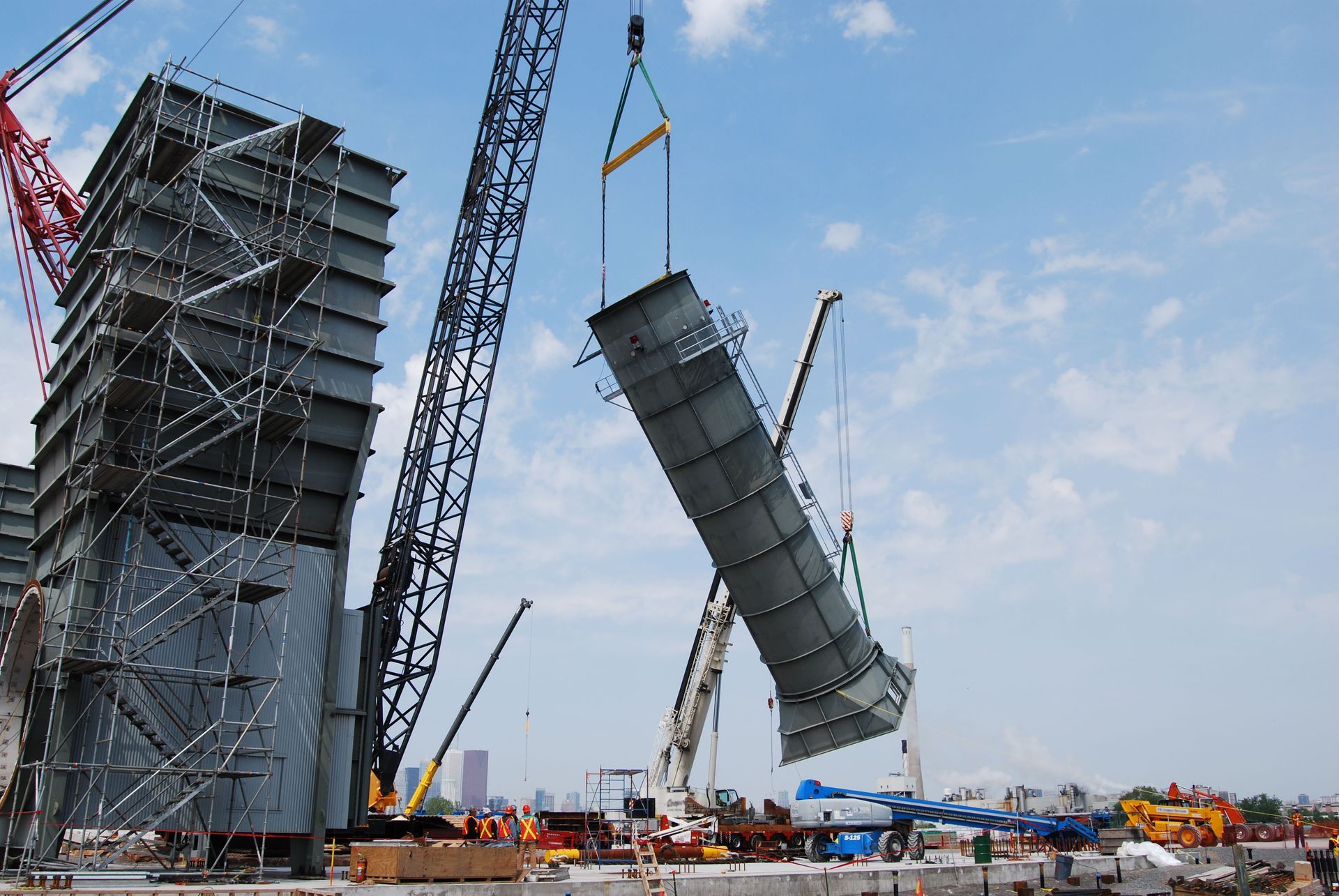
A well-crafted lift plan maps out every stage of the move long before any machinery leaves the ground. It defines the exact step-by-step sequence, load pathways, crane positioning, and equipment specifications required for the operation. Having a clear blueprint allows the entire team to anticipate challenges and establish secondary pathways if obstacles arise. This level of preparation is particularly relevant as global investments in heavy equipment relocation expand. According to Wise Guy Reports, the global Industrial Heavy Machinery Moving Service Market is expected to grow at a CAGR of 4.9% from 2025 through 2035, driven by increasing demand for logistics across manufacturing, construction, mining, and energy industries. Structured planning ensures that every phase of the move aligns with strict operational standards.
6. Establishing Clear Communication Channels
Clear communication between crane operators, spotters, and ground crews prevents missteps that stall project timelines. In noisy job sites, relying solely on verbal instructions often leads to confusion and delayed reactions. Utilizing standardized hand signals and dedicated radio channels ensures that commands flow seamlessly across the entire team. Industrial rigging procedures require designated signal persons who maintain constant line-of-sight contact with equipment operators. When everyone on the crew understands their role and uses unified signals, machinery moves smoothly without unnecessary pauses or risky miscommunications.
7. Verifying Structural Support Points
Attaching lifting hardware to weak or incorrect points on a machine can cause structural damage to the asset itself. Machinery manufacturers design specific lifting lugs, eye bolts, or designated frame areas intended to carry the weight during transport. Industrial rigging protocols require identifying these attachment points before applying tension to the slings. Connecting gear to unverified housing covers, shafts, or weak outer frames risks dropping or deforming expensive machinery. Taking time to verify structurally sound attachment points protects valuable equipment from costly damage during relocation. Reviewing the equipment manual alongside these physical indicators ensures that every connection point meets safety tolerances before the lift begins.
8. Managing Rigging Angles and Sling Tension
The angle of a sling dramatically alters the actual load force applied to each leg of the industrial rigging arrangement. As the horizontal angle between the sling and the load decreases, the tension on each sling leg increases rapidly. Operators who ignore angle mechanics risk overloading slings that seem adequate for straight vertical lifts. Using spreader bars or adjusting sling lengths keeps angles within safe parameters and distributes tension evenly across all anchor points. Proper angle management protects equipment from sudden stress fractures and keeps project schedules on track. Consulting sling tension charts before configuring lower-angle lifts guarantees that all hardware remains well within its certified working load limit.
9. Securing the Lift Zone and Managing Perimeter Access
Unauthorized personnel entering a lift zone create severe safety hazards that force operations to halt immediately. Establishing clear perimeters with physical barricades, warning tape, and signage keeps non-essential workers at a safe distance. Industrial rigging operations demand controlled environments where only authorized personnel participate in the movement of heavy assets. Clear perimeter control prevents accidental disruptions, protects site workers, and allows the crew to focus entirely on load control. A secure work zone ensures uninterrupted workflow and reduces operational risks.
10. Conducting Post-Operation Reviews and Maintenance
Once a heavy machine is safely positioned, the work is not quite finished. Reviewing the operation allows teams to identify process improvements, assess gear condition, and document key performance metrics for future projects. Industrial rigging equipment needs proper cleaning, lubrication, and organized storage to prevent rust, chemical degradation, or mechanical wear while in storage. Maintaining equipment in prime condition ensures it stands ready for the next scheduled move without requiring last-minute replacements or repairs. Continuous evaluation and diligent gear care keep future project schedules running smoothly.
Preventing delays during heavy machinery moves comes down to careful preparation, clear communication, and precise technical execution. From selecting hardware to managing load angles, every step in the process contributes directly to keeping your project on schedule and within budget. When you need dependable execution for your next heavy asset move, partner with Price Erecting Company to ensure your project proceeds safely, efficiently, and without unexpected interruptions.